13.3.3 Does your university as a body participate in co-operative planning for climate change disasters, working with government?

The Islamic University of Lebanon (IUL) actively collaborates with government agencies and local organizations in co-operative planning for climate change-related disasters. Recognizing the increasing frequency and severity of climate-related challenges, IUL participates in joint initiatives to develop strategies for disaster preparedness, response, and recovery.

The university contributes through research projects focused on climate resilience, hosting workshops and forums that bring together experts, policymakers, and community leaders to address climate risks. Additionally, IUL provides education and training programs aimed at equipping students and local communities with the skills to respond effectively to climate change disasters.

This cooperative approach ensures alignment with national disaster management plans, fostering a stronger and more cohesive response to climate emergencies.

SDG 13.3.3: Co-operative planning for climate change disasters

Climate change is now affecting every country on every continent. It is disrupting national economies and affecting lives, costing people, communities and countries dearly today and even more tomorrow.

People are experiencing the significant impacts of climate change, which include changing weather patterns, rising sea level, and more extreme weather events. The greenhouse gas emissions from human activities are driving climate change and continue to rise. They are now at their highest levels in history. Without action, the world’s average surface temperature is projected to rise over the 21st century and is likely to surpass 3 degrees Celsius this century—with some areas of the world expected to warm even more. The poorest and most vulnerable people are being affected the most.

Climate change is the global phenomenon of climate transformation characterized by the changes in the usual climate of the planet (regarding temperature, precipitation, and wind) that are especially caused by human activities. As a result of unbalancing the weather of Earth, the sustainability of the planet’s ecosystems is under threat, as well as the future of humankind and the stability of the global economy.

Over the past two decades, Lebanon has actively worked on improving its capacity to adapt to and mitigate climate change. The country has actively participated in the UNFCCC (United Nations Framework Convention on Climate Change). Lebanon’s overall GHG (greenhouse gases) emissions are minimal compared to other countries due to the country’s size and relatively small industrial sector.

The university, through the strategy it adopted, has been working to reduce the effects of climate change through the adoption of several policies, including relying on green spaces outside and inside the university campus to reduce the percentage of carbon, interest in afforestation of the surrounding lands and motivate students to care about the environment by engaging them in multiple activities aimed to protect the environment and educate them environmentally through holding several seminars and workshops aimed at introducing them to the effects of climate change and the available means to reduce its negative effects on the environment and people.

13.3 Environmental Education Including Disaster Planning
The University strategy states the following “The promotion of sustainable and balanced development across Lebanese territory and the evolution toward global” and which is from the major social challenges that are tackled in the strategic plan of IUL. Also, it is mentioned in the letter of the President of the University which states that: “IUL has issued new specializations that are harmonized with the global change.

13.3.3 Does your university as a body participate in co-operative planning for climate change disasters, working with government?

• Participation with the government, red cross..(events):


1. Innovate for Lebanon.

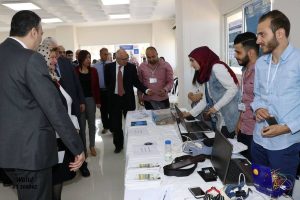
Under the patronage of the Minister of Education and Higher Education Marwan Hamadeh, represented by Brigadier General Dr. Mohsen Jaber The Islamic University of Lebanon hosted, in the Wardania Complex, the national competition for engineering projects in Lebanon entitled “Innovate for Lebanon”, which was attended by the President of the University, Dr. Dina Al-Mawla, Director General of Higher Education Dr. Ahmad Jamal, Secretary General of the Supreme Islamic Shiite Council Nazih Jammoul, Captain of Engineers in Beirut represented by Engineer Rashid Sarkis, deans and directors of universities, students of projects and their professors, Secretary General of the Islamic University Dr. Hussein Badran, and interested.

The ceremony began with the Lebanese national anthem and a welcome speech by the master of the ceremony, the Vice Dean of the Faculty of Engineering at the Islamic University, Dr. Muhammad Ayyash, in which he pointed out the importance of the competition through the production of knowledge and cooperation at the national level for all engineering faculties in Lebanon and in accordance with scientific research standards.

The President of Rafic Hariri University, Dr. Ahmed Smeili said in a speech in which he indicated that the main purpose of launching this national competition is to stimulate creativity and invest it in solving a national and humanitarian problem, which is sustainability. He pointed out that the biggest problems facing Lebanon and the world are related to climate change and what human actions and actions cause it to accelerate. The selection faces many environmental challenges, rivers and polluted seas, air full of toxins and behaviors that lead to environmental collapse if we do not address the matter and join efforts, stressing that from this point of view, the idea of ​​the competition was to involve the talents of the current generation to contribute to the manufacture and formulation of solutions that limit environmental and human collapse to preserve the will God bless this dear country.

Al-Sumaili thanked the sponsor of the ceremony, the Minister of Education, Dr. El-Gamal, Dr. El-Mawla, and the Islamic University for hosting this competition, praising the efforts made to realize this project.

The President of the University, Dr. Dina Al-Mawla gave a speech in which she said: “I welcome you to the Islamic University of Lebanon, and we are all proud to be the headquarters” and starting point” for this pioneering project, the “Lebanese Creativity Competition”, for promising young people who excel in their homeland, hoping this creativity will encourage companies to pick up the fruit of young minds. They compete with each other, “the only purpose of which is to show the highest efficiency and the productive project for our homeland. We all hope that it will take care of these creators.”

She added…Today, nations are not classified by their population, nature, or even by their tourist attractions, but rather by what they hold of intellectual innovations, development and scientific research that push them to the ranks of developed countries in the fields of technology of all kinds. Let us stop chanting that we have exported crafts and medical sciences to the world because, unfortunately, we exported ideas, brains and innovations abroad that were developed by embracing them by the public and private sectors that the world knew how to invest in order to make sophisticated, advanced and modern countries. Therefore, this day is not only a distinction match at the university level, but it is a day in which an elite of Lebanon’s students stand in front of the projects they produced, competing among themselves for the best. We all hope that the Ministry of Higher Education will work to encourage them, protect their creativity and market it with the relevant ministries, so that we will have motivated our youth towards permanent creativity. As for the word creativity, it has another meaning in our institution. – virtus – patria.

She indicated d. Lord, that there is creativity in every word of this slogan through science and knowledge in accordance with the values ​​and morals that each of you possesses to serve the nation as a whole, and projects will be evaluated today according to precise criteria and according to the various types of creativity: there is what is: development, and some of it is continuous, the alternative Including: also the separator, and finally the so-called decisive creativity. Note that creativity and invention should not be confused despite their convergence through the modernity of the topic included in our continuous daily work, so we wish success and excellence for all. Welcome again to your university, the Islamic University of Lebanon, Creativity University for the whole nation.

Dr. Ahmed El-Gammal gave a speech in which he praised this scientific production, noting that the Minister of Education presented them with important and enlightening ideas for this project, considering that the most important thing in this project is the fruitful cooperation between educational institutions in Lebanon that serve the community, stressing that this meeting is an initiative. A mission to gather scientific energies, noting the role of the project team and the role of the Minister of Education Marwan Hamadeh, the incubator for the project, “stressing the importance of the continuity of such projects and competitions, which would show the other side of universities towards leadership that contribute to the development of society.”

El-Gamal thanked the universities participating in the competition, praising the efforts of the Islamic University in their support and dedication to the success of this project.

Then the representative of the Minister of Education, Brigadier General Mohsen Jaber, gave a speech on behalf of the Minister of Education, Marwan Hamadeh, and said: “We are meeting today in the presence of a group of zealous administrative collectors and scholars who have resolved the issue of the development of the homeland and the regions working in it, raising the banner of “No to stillness, no to stagnation, no to surrender, yes to freedom, work, progress and independence.” Yes, for the development of the citizen and society, the progress of civilization and the elevation of the human being.” His concern was to build the individual, the productive citizen, and the active thinker on the nation’s space, so they established productive and pioneering university edifices in their competencies and scientific and educational capabilities. A universe can accommodate it, and it is not limited by place.”

Dr. continued. Jaber: We, the people of knowledge, realize that our citizens are capable of acquiring, transferring and producing knowledge, and they are ahead of their knowledge, just as the latent ability of our people has not and will not be crushed by the years of darkness and cruelty of ages and days. It was the benevolent edifice that produced scholars, researchers, thinkers and jurists, so they presented in their homeland and abroad all the proofs of the power of this God.

2. Litani River Authority.

A memorandum of cooperation between the Islamic University of Lebanon and the Litani River Authority.

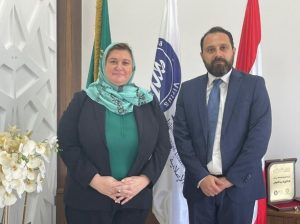
🖋 At the invitation of the President of the Islamic University of Lebanon, Prof. Dina Al-Mawla, the Director General of the Litani River Authority, Dr. Sami Alawia, visited the university’s headquarters in Wardania, at the head of a delegation that included its advisors and heads of the department’s departments: Engineer Naseem Bu Hamad, Engineer Ghassan Jubran and Engineer Hanan Baydoun.

And an expanded meeting was held that included the president of the university, Dr. Alawiya and the accompanying delegation are: Secretary General of the Supreme Islamic Shiite Council and Assistant Chairman of the University’s Board of Trustees A. Nazih Jammoul, Director of Al-Wardania Complex, Prof. Abdel Moneim Kobeisy, Dean of the College of Engineering, Prof. Muhammad Ayyash, Dean of the College of Economics and Business Administration, Dr. Ali Hayek, in addition to the heads of departments and members of the teaching staff at the College of Engineering.

The President welcomed the Director General, Alawia, as one of the people of the university and not a guest, as he was a lecturer and is still supervising many graduation projects for university students, thanking him and the accompanying delegation for their visit to the university, which puts the capabilities of its faculties, especially the Faculty of Engineering, Law and Business Administration at the disposal of the Litani’s interest for mutual benefit Through work teams of professors and students who provide their scientific and practical experiences.

President Al-Mawla reviewed the engineering disciplines that the authority can benefit from, especially civil and surveying, stressing the importance of artificial intelligence in providing solutions to the problems facing the Litani Authority.

 After mutual acquaintance between the attendees with their scientific specializations, Alawia stressed the importance of cooperation and benefiting from the expertise of professors and students in some of the problems facing the Litani’s interest and finding appropriate solutions to serve the community. Ways of cooperation with the Faculty of Economics and Business Administration through accounting and informatics programs.

A welcomed all. Nazih Jammoul and Dean Ayyash, Director Alawiya, the accompanying delegation, and the audience, praising the importance of cooperation between the university and the Litani Department, and the heads of departments and professors at the Faculty of Engineering presented areas of cooperation between them and the Litani Department, in practical or research terms, and benefiting from the database affiliated with the Litani Department in this the field.


3. The Role of the Ministry of Economy and Trade in launching a green economy in Lebanon.”

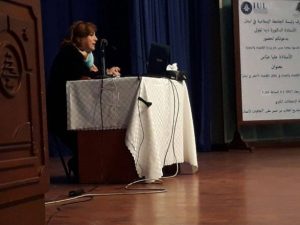
The Islamic University of Lebanon was established in the presence of the university’s president, Prof. Hussein Badran and Director of the Teaching Center – Pictures d. Anwar Tarhini, a seminar presented by the Director General of the Ministry of Economy and Trade, Mrs. Alia Abbas, under the title “The Role of the Ministry of Economy and Trade in launching a green economy in Lebanon.”

The symposium was followed by a presentation of projects for students of the Business Ethics course.


Implementation of an automated snow monitoring system using MODIS products in Lebanon

Snow Cover Area monitoring is an important factor in studies of global climate change, regional water balance and soil moisture. Recently, the usage of remote sensing techniques has flourished. In fact, remote sensing data provides timely adequate snow cover information for large areas. While the National Center for Remote Sensing in Lebanon (CNRS) has recently established an operational monitoring room for natural resources and natural disasters, this paper presents the implementation of a fully automated snow cover monitoring system based on Moderate Resolution Imaging Spectroradiometer (MODIS) satellite images. The system uses snow products from EOS Terra, and Aqua satellites to monitor the Snow Cover of Lebanon during the snow season (i.e. November-April). The importance of this project lies in its daily and fully automated process of acquiring, processing, storing and displaying statistics of the snow covered areas in Lebanon. Applying a custom algorithm based on combining Terra and Aqua snow products will reduce cloud contamination.

Beqaa water crisis “problems and solutions” at the Islamic university table in Baalbek

The Islamic University of Lebanon- Baalbek Branch organized a seminar on the “Water Crisis in the Beqaa”, in cooperation with the Beqaa Water Foundation and the Italian Civil Volunteering Association, in the presence of the patron of the Diocese of Baalbek for the Roman Catholic Royals Bishop Elias Rahal, Mufti Sheikh Abdou Qataya, President of the Baalbek Municipal Union Nasri Osman, Chairman of the Board of Directors and Director General of the Beqaa Water Foundation Engineer Rizk Rizk, member of the presidency of the Movement of Amal Brig. Gen. Abbas Nasrallah, head of the Center for Civil Organization in Baalbek Engineer Jihad Haidar, Joanna von Gutenberg, Director of Water Projects in Lebanon at GVC, Mayor of Baalbek, Brigadier General Hussein al-Laqis, represented by Captain Mohamed Taha, head of the movement’s municipal affairs office in the Bekaa, Abbas Morteza, deputy official of Hezbollah’s municipal work in the Bekaa, Hani Fakhreddin, and academic, educational and social activities.
Dr. Zain al-Abidin Haidar, addressing the Islamic University of Lebanon, said: “When it comes to the issue of water and its preservation, who is more keen than the state of Speaker Nabih Berri, aware of its life and economic importance, he spares no effort to support all relevant studies and work, from his daily insistence on resolving the issue of Litani, to the establishment of the Assi Dam, not ending with the support of our meeting.”
“FAO’s climate and hydrological studies, leading up to the Dublin Conference on Water and Sustainable Development in 1992 and the Rio de Janeiro Summit in the same year, have all come to several conclusions, including that freshwater sources are very limited and weak, necessary for the preservation of life and the environment, that water management must be based on a participatory rather than exclusive approach, and that household consumption and community education play an important role in water conservation and consumption, and most importantly, “Water has great economic value in all its uses and must be recognized as an economic commodity, and these conferences have stressed the importance of collecting the right information and accurate climate data, so that decision makers can rely on clear indicators to know treatment methods such as dam construction, well drilling, network development, etc.”
“The National Center for The Quality of Medicine, Food, Water and Chemicals at the Lebanese University published the results of the analysis of water samples in a number of bekaa areas, which showed that bacterial contamination affects surface and groundwater and distribution networks, so lip water in the Bekaa is almost undrinkable. “If this indicates anything, it shows that the health of the citizen is in great danger, so what do we leave to our children and to future generations of water, least of which is to drink.”
“Many unfavourable conditions have led to a decrease in the amount of water available in the Bekaa, including climate change, decreased rainfall, Syrian displacement, life development that has led to an upward increase in water consumption, contamination of surface and groundwater sources, and the drilling of random wells that have drained groundwater,” Rizk said.
“No one thinks that the Bekaa Water Corporation, which began operation in 2002, is solely responsible for water, but every citizen is responsible for water conservation and quality,” he said.
“The foundation is suffering from a shortage of human resources, with 190 employees, in addition to 180 out of demand, and a shortage of about 500 people according to regulations that have not noticed any sanitation user, and under the suspension of employment,” he said. “We are facing a major challenge, and without the support of the Ministry of Energy and donors, the foundation would not have collapsed, and we would not have been able to provide water in the Bekaa.”
He announced that the company’s debt amounts to 161 billion lire, of which 89 billion lire for the Lebanese Electricity Corporation, 5 billion for Zahle electricity, 11 billion for municipalities and 11 billion for guarantees.”
“We have lip water and sanitation plans, and studies and plans for irrigation water are being prepared, with the support of the Ministry of Energy and Water and donors.”
“We are a humanitarian non-profit organization, we have been working since 2006 in Lebanon, and today we are celebrating World Water Day with you, to send a message that everyone has the right to water,” von Gothenburg said.
“The most important obstacles and problems in Lebanon are that not everyone in Lebanon has proper access to water,” she said, adding that “we are working on water projects in Lebanon in two areas, to provide additional water sources to meet the needs of displaced Syrians, and to ensure the needs of host communities, which in turn suffer from water shortages.”
Dr. Talal Darwish pointed to a shortage of water resources in the Bekaa, and said: “Statistics confirm that the overall path of the amount of water available is a downward path, knowing that the largest agricultural holdings and the largest use of groundwater we find in Baalbek Hermel, Lebanon among the Arab countries threatened by water shortages and scarcity, and what is needed is to improve water management so that we can make greater use of our water.”

  • Agreements between university (faculties) and others


1. Environment and Sustainable Development: Challenges and Solutions”

Under the patronage of the President of the Islamic University of Lebanon, Prof. Dr. Dina Al-Mawla, and under the supervision of Prof. Dr. Saad Ajeel Mubarak, President of the International Peace Forum for Culture and Science, the Islamic University of Lebanon has the honor to invite you to attend the “Environment and Sustainable Development: Challenges and Solutions” conference.


Alawiya visited the Islamic University and signed a memorandum of cooperation for specialists from the National Interest and the university to participate in workshops to produce joint development programs.


In response to the invitation of the President of the Islamic University in Lebanon, Prof. Dr. Dina Al-Mawla, Director General of the National Litani River Authority, Dr. Sami Alawiya, visited the university’s headquarters in Wardaniyeh at the head of a delegation that included his advisors and heads of the authority’s departments: Engineer Nassim Bou Hamad, Engineer Ghassan Gibran, and Engineer Hanan Baydoun.

An expanded meeting was held that included the University President, Dr. Alawiyah and the accompanying delegation are: Secretary General of the Supreme Shiite Islamic Council and Assistant Chairman of the University’s Board of Trustees, A. Nazih Jammoul, Director of the Wardaniya Complex, Prof. Dr. Abdel Moneim Qubaisi, Dean of the Faculty of Engineering, Prof. Dr. Muhammad Ayyash, Dean of the Faculty of Economics and Business Administration, Dr. Ali Hayek, in addition to department heads and members of the teaching staff at the College of Engineering.

The President welcomed Director General Alawiyah as one of the university’s people and not a guest, as he was a lecturer and still supervises many of the university’s students’ graduation projects. She thanked him and the accompanying delegation for their visit to the university, which places the capabilities of its faculties, especially the Faculty of Engineering, Law and Business Administration, at the disposal of the Litani Department for mutual benefit. Through working teams of professors and students who provide their scientific and practical expertise.

President Al-Mawla reviewed the engineering specializations that the Litani Authority can benefit from, especially civil and surveying, stressing the importance of artificial intelligence in providing solutions to the problems facing the Litani Authority.

After mutual acquaintance among the attendees with their scientific specializations, Dr. President Alawiya, may God bless her invitation, stressing the importance of cooperation and benefiting from the experiences of professors and students in some of the problems facing the Litani Department and finding appropriate solutions to serve the community.

Alawiya presented areas of cooperation with legal specialties through developing implementing decrees to protect river borders and prevent encroachments, pointing to ways of cooperation with the College of Economics and Business Administration through accounting and informatics programs, noting the department’s needs for agricultural surveyors and technicians, stressing the need for experts in the drainage process. Industrial and finding appropriate solutions that prevent pollution of the Litani River, placing databases for researchers to benefit from, pointing out the most important works that can be started, starting from a field visit to the Qaraoun Dam tunnels, inspecting them, and inspecting the dam’s gaskets to determine their effectiveness and the amount of water leakage, all the way to showing the boundaries of Qaraoun Lake.

A welcomed. Nazih Jammoul met Director Alawiyah, the accompanying delegation, and the attendees, praising his activity and constant work for the public interest, stressing the importance of cooperation between the university and the Litani Department and turning the cooperation agreement into reality for mutual benefit between the two parties.

Brigadier General Ayyash welcomed the Director of the Litani Department and the attendees, thanking the university presidency for all the support it provides, stressing the importance of cooperation between the university and the Litani Department in all possible fields, and proposing the possibility of college students undertaking the summer training course to benefit from the fields available to them, as well as the possibility of conducting research projects in any proposal or proposal. A problem facing the Litani Department.

The heads of departments and professors at the Faculty of Engineering also presented areas of cooperation between them and the Litani Authority, whether from a practical standpoint (field visits – studying the structure of the dam – setting boundaries for Lake Qaraoun – inspecting the tunnel -…) or from a research standpoint and benefiting from the database of the Litani Authority in this field. The attendees agreed to hold a meeting soon in which the Litani Department will give a detailed presentation about the department (its departments – its work – the problems it faces) in order to better benefit from areas of cooperation.

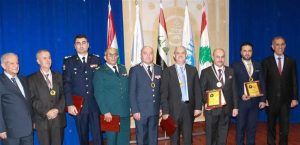
In conclusion, a memorandum of cooperation was signed between the President and the Director, Dr. Alawiya, followed by taking souvenir photos with the attendees. The agreement stipulates that the two teams will cooperate in the field of involving specialists from the National Authority of the Litani River and the Islamic University of Lebanon in workshops related to the aforementioned cooperation topics to produce joint development programs. The National Litani River Authority undertakes the following tasks:

Providing the Islamic University in Lebanon with the necessary available information on measurements of the flow of rivers and springs, groundwater depths, water quality and quantities, and hydroelectric production, in preparation for producing information programs related to water modeling and determining the extent of the river boundaries of the Litani River course and its main tributaries.


* Establishing a specialized technical team to cooperate with the team affiliated with the Islamic University in Lebanon within the joint team formed between the department and the Islamic University in Lebanon.

* Publishing the results of the research with reference to the names of the two institutions, in addition to the department’s commitment to enabling university students to conduct research, access data, and continuous training in irrigation projects, hydroelectric power generation plants, and water measurement stations.

The Islamic University undertakes the following tasks:

* Assisting the Authority in developing a model (MODELE) of the water cycle (with its various stages) in the surface and groundwater Litani Basin. The proposed model includes the level of evaporation, deposition, flooding and storage, as well as defining the boundaries of the river properties of the Litani River course and its main tributaries and the Authority’s appropriations in the areas that are identified. By the joint technical team.

* Assisting the National Litani River Authority and providing it with information or electronic systems that will improve water management, improve productivity in hydroelectric power plants, raise the level of control and protection in the plants, improve the productivity of generators, and cooperate with the Litani River National Authority in order to determine the total sediments since the date of construction of the Qaraoun Dam. By using the techniques available at the university to determine the amount of sediment.

This agreement shall be effective for a period of five years. It is subject to renewal or amendment through written means and with the consent of both parties.

The delegation toured the university complex in Wardaniyeh, and Dr. Alouba expressed his astonishment and admiration for the complex in terms of the splendor of the building, equipment, and laboratories. After the tour, the president gave a speech in honor of Dr. Allouba and the accompanying delegation.

Cooperation with municipalities:
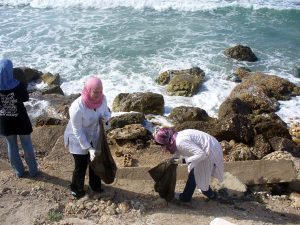
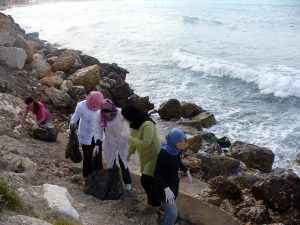
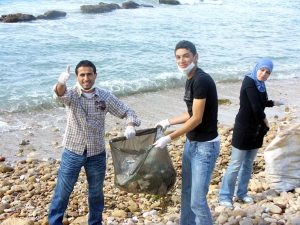
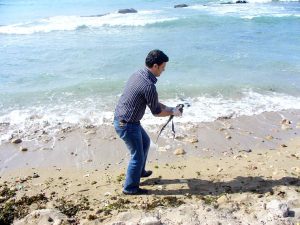
Within the framework of the challenge to the impacts of climate change, the university has been cooperating with the local community, especially with the municipalities, on activities that contribute to adaptation and reducing the risks of climate change, so it organized several campaigns, including the Cleanling Campaign along the southern shore in cooperation with the Union of Municipalities of Tire

https://www.yasour.org/archive/sub_apr08_350.html

https://www.yasour.org/archive/sub_apr08_350.html


Regional
Organizing scientific conferences
Where as the phenomenon of climate change is a global phenomenon that is not limited to a specific country or region, it was a focus of attention from all countries. Therefore, the Islamic University in Lebanon was a pioneer in hosting conferences related to sustainable development and climate change, including the conference that was held in the university campus under a title “Environment and Sustainable Development” on October 29, 2018, which included scientific sessions and various workshops on renewable energy, geographic information systems, and data of the natural and human environment.